Where are They Now? Part of a series on former members of the MAC Team

Posted by & filed under bike, integrated pest management, mosquito abatement, San Francisco.


Where are They Now? Part of a series on former members of the MAC Team: Michelle Hill


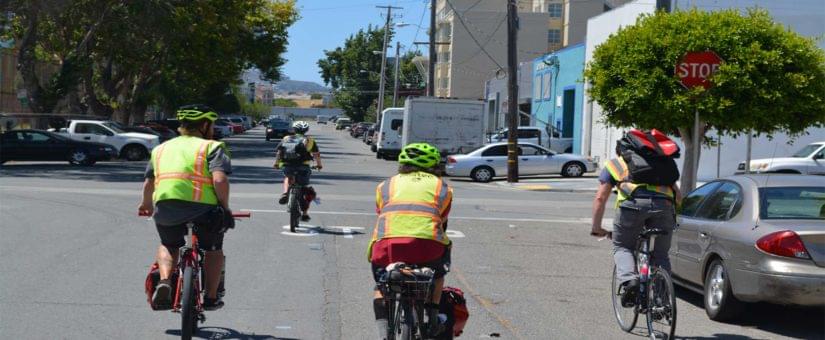
When new members of the Mosquito Abatement Courier (MAC) crew are assigned their first sections of San Francisco, they use maps that indicate the location of nearly every single one of the drainage catch basins (CBs) in their areas. Most of them intuitively realize how logical this is. There are over 22,000 CBs on San Francisco’s public streets and parks  and it’s obviously beneficial to have their locations pinpointed on the maps. But for the first few years of the MAC program, CBs were not shown on the maps. MAC crew members had to find CBs on the street. All this changed just over two years ago when MAC team member Michelle Hill spent the winter of 2009 – 10 researching and designing the software that literally put the CBs on the map.

In the spring of 2009, Michelle, a talented and experienced singer and musician joined the MAC crew and quickly established herself as a dependable and likable team member. As mentioned, in those times CBs were not on the maps. She, like all other MAC workers, had to find each CB the hard way by checking both sides of every street, uphill and down, finding the obvious ones on corners and the tricky mid-block ones as well as dicey ones located off the curb in traffic. And, like other MAC workers, she asked that the maps be redrawn with the CBs cited on them. So in the latter part of the 2009 season, each MAC worker took a pen to mark the location of each CB on his or her map. Unlike other MAC workers, Michelle also had the time and knowledge to create the software needed to do the work. At the end of the season, she was assigned the task of making new maps that would have those CBs located on them. As Michelle herself has said, she was just “obsessive – compulsive” enough to actually enjoy the mapmaking job. So she spent the winter of 2009 – 10 researching dozens of maps with hand scrawled notes and markings to record the locations of the over 22,000 CBs.

When the 2010 season began, the MAC crew had a series of maps that covered all of San Francisco and pinpointed the locations of almost every public CB in the City. It would be unrealistic to expect every CB to be on the maps. Human error on the original maps meant some CBs that existed would be missed while some that didn’t exist would be added. And computer error could be frustrating. Sometimes the computer would locate a CB a half block away from its true site. No matter how much she would move her cursor to the true location, the computer stubbornly “insisted” on landing the CB elsewhere.

But these problems were few and far between; the new maps have not only made MAC work easier they have made our job more efficient. Now we have more time to do other tasks such as inspect standing water on roadsides and in parks or to explain our job to members of the public.

In addition to her indispensable map work, Michelle was a solid worker in the field. She enjoyed her work, seeing the chance to connect to different neighborhoods as being a “citywide Easter egg hunt.” MAC work reinforced her cycling confidence. And the job’s attention to detail and public service aspects have served her well in her subsequent work experiences.

After leaving the MAC crew, Michelle worked as a substitute teacher at a local pre-school before going to a pharmacy company and then a craft store. Now she works as a designer at Pottery Barn in the Ice House at the foot of Telegraph Hill, designing fabrics, dishes and other household products.

A talented bassist, guitarist and singer, Michelle has toured or recorded with The Flip, Homeowners and her current band Brilliant Colors, going as far as eastern North America and western Europe. She recalls the crowd at Ann Arbor, Michigan as being the best ever.

She still stays in touch with current and former MAC workers and joined us on the August 2011 Critical Mass when MAC crew bikers took that month’s ride to Hunter’s Point for the first time. 

By Howard Williams, Veteran MAC Team Member

MosquitoSF.com is the official site of the San Francisco Mosquito Abatement Courier Team (SF MAC)

SF MAC is Powered by SF Water and Pestec Integrated Pest Managment


San Francisco Microclimates

Posted by & filed under San Francisco.

San Francisco is famed for its weather. Fog and wind are celebrated, cursed – or both – in song, story and conversation. And while the City is not as wet as Portland nor as sunny as Miami, it does have a sometimes long rainy season and a pleasant Indian summer. And just as well known as the City’s climate is its unpredictability. The mercury may often rise to over 60 on a mild January afternoon or it may drop into the 40s and feel like 30 on a windy day in June. Much of this unique weather is shaped by the microclimates that nestle in the City’s valleys and along the slopes of over 40 hills. The variety and unpredictability of San Francisco’s topography and climate create a matrix of possible weather situations.

A microclimate is defined as the climate of a small area especially when that climate differs from the surrounding areas.

A variety of factors and forces form a microclimate. Not only do meteorological, biological, topographical, chronological and other natural influences help form a microclimate, but also technological and cultural factors play their parts.

Among meteorologists, San Francisco is noted for microclimates. The microclimate entry on Wikipedia mentions San Francisco and notes that temperatures in some of its neighborhoods may vary by as much as 9 degrees Fahrenheit from block to block

In San Francisco microclimates are also influenced by each of the four dimensions – length, height, width and time.

From the Golden Gate to San Bruno Mountain, the length of San Francisco runs along an irregular spine of central highlands. These hills form a steep barricade between the cool, moist maritime climate on the coast and the drier, warmer Mediterranean zone by the Bay.

The width of San Francisco – from the Pacific coast to the Bay – dissipates the fog and wind as they move east. The process is usually a slow, gradual one but sometimes a fogbank at the beach will “burn off” a few blocks inland.

The heights of San Francisco’s hills also act upon the weather. Hills can block fog or shelter it. Rain may fall heavily on one side of the central heights while making just a drizzle on the other.

And time changes the weather in San Francisco more often than in most places. Many spring and summer days begin with a fog that “may chill the air” as the City’s official song reminds us. But by early afternoon, wind or heat may drive or dissipate it away.

One afternoon, the Old Veteran was assigned to work the neighborhoods flanking the central heights. As he rode from Buena Vista Park along the spine of the City to Forest Hill, he was exposed to different weathers in less than an hour.

Most of the day, the weather had been dry though gloomy but in the early afternoon clouds dark with rain moved from the southeast toward the City. But the light gray clouds above the City’s coastal neighborhoods began to dissipate and admit shafts of sunlight here and there. As he steadily ascended a pass between Buena Vista Park and the Upper Market Street area, a beam of sunlight beautifully brightened a freshly painted yellow Victorian house. In the background the sky was a severe deep blue. The contrasts in light and color were vivid. He remembered the punchline from a Steve Martin joke: “But the most amazing thing of all is I get paid for doing this.” Even as he saw the house gleaming in sunlight, a few drops of rain began to gently fall on him. As he rode among the canyons and hills of the Upper Market area, the light rain continued. But on Twin Peaks Boulevard, high above the trees, a strong southerly wind blew more rain into his face. Turning west, he rode downhill and the rain subsided. He then crossed Laguna Honda Boulevard into the Forest Hill neighborhood. But as he ascended fog shrouded Forest Hill, drops of water fell from the trees. On one street near the hilltop, the trees dripped enough to create a persistent drizzle.

Just as seemingly minor natural forces can impact a microclimate, so can seemingly minor human activities cause a microclimate change. These effects may be beneficial or harmful.

A grove of trees or a building can cause microclimate change. San Francisco’s natural environment had very few forested areas. Most of the trees we see in San Francisco were introduced by humans in the last 150 years. Trees can moderate wind and cold by serving as windbreaks or they can decrease heat by providing shade.

In the 1800s, when Market Street, the City’s major transit and commercial thoroughfare was laid, it was blocked by Mint Hill, which separates the Castro and Hayes Valley neighborhoods. Workers leveled the hill’s southern slope to allow Market to pass over what is now Duboce Street. As a result, westerly winds now sweep unimpeded along Market Street.

In its natural state, San Francisco was covered by sand dunes. The western half of the City was covered by sand dunes, some of which extended as far east as the Mission District. Even today, San Francisco’s gardeners must contend with sandy soils in many of the City’s back yards. To tame the moving sands, San Franciscans planted trees and other plants. The planting of trees to make Golden Gate and McLaren Parks were the largest of those efforts.

The filling of San Francisco Bay has directly and indirectly affected the City’s microclimates. Filling the Bay shrunk its size and as a result, the moderating influence exerted by a large body of water also decreased. In addition, the filling of the Bay in San Francisco allowed for the construction of major skyscrapers on the landfill. Today, most of the City’s highest buildings stand on landfill. As in most cities, San Francisco’s high rise building area creates an urban heat island (UHI). Discovered almost 200 years ago in London, the heat island effect is in urban areas with high densities of buildings and low amounts of vegetation. As a result, temperatures are higher in UHIs than in less developed surrounding areas.

These examples show that human actions can affect microclimates in a variety of ways. But if well intentioned, thoroughly studied and properly managed, these actions can actually be beneficial to the environment and even mitigate previous damage done by humans.

By Howard Williams – Veteran MAC Team Member


Mosquito Abatement Rides

Posted by & filed under Uncategorized.

On the day before and the day after San Francisco’s 20th Anniversary Celebration of Critical Mass, two of Pestec’s Mosquito Abatement Couriers (MAC) conducted and assisted two educational rides in the City’s Mission District.

On Thursday, September 27, a current MAC crew member and a former one hosted the Mosquito Abatement Ride attended by about a dozen riders from Petaluma to Peru and Europe. Dave and the Old Vet led the riders on a short ride from Valencia & 16th to Market & Duboce Streets while describing mosquito abatement and the bicycle’s role in it.

We first stopped on Albion, a side street that parallels Valencia. There we practiced looking for catch basins (CBs, also called sewer drains) in tricky locations. The newcomers did well, finding all six CBs on that part of Albion. Dave and the Old Vet also noted that we were standing on the location of the first Mission Dolores, founded in 1776. In 1791, the Mission was relocated to its present place on 16th and Dolores Streets.

That was our next stop and there we discussed the history of what is San Francisco’s oldest building. Started as a Roman Catholic mission church, this was the place where the great fire of 1906 was halted. San Franciscans knew that if the Mission was burned the rest of the City would likely be lost. When the Mission was saved, the Mission District was saved. When the Mission District was saved, San Francisco was saved.

From Mission Dolores we rode west toward Market and then north along that street for a few blocks. The riders again proved themselves adept at spotting hard to find CBs.Whenever possible, Dave and the Old Vet allowed them to contribute their painting skills to the curbs above the CBs but could not let them apply the reduced risk larvicide.

At Duboce and Market, we all turned left to view the Bike Mural. Although all the riders had already seen it, Dave and the Old Vet pointed out something they’d overlooked.

Near its halfway point, the mural depicts a San Francisco street scene. Shown in that scene is a CB. One day just after the mural’s completion in 2010, Mona Caron, the lead muralist, was discussing it with some observers. Dave happened to be doing his job at a nearby CB. He told her the purpose of the different colored paint spots by each CB. After he explained how each paint color represents a different round of inspections and treatments, she borrowed his spray can and painted a spot next to the image of the CB on the mural. And MAC workers including Dave and the Old Vet were allowed to add to it for a few weeks afterward.

This concluded the Mosquito Abatement Ride and Pestec workers hope that the ride’s attendees take the mosquito abatement information back to their hometowns and homelands from Petaluma to Peru, Mexico and Europe. With the USA enduring our worst year ever for West Nile Virus, we only hope that this method of reduced risk Integrated Pest Management will spread quickly.

The next day, Friday, September 28, over 3,000 riders enjoyed an exciting yet safe 20th Anniversary Critical Mass.

On Saturday the 29th, the 3rd Annual Sewer Ride was held. Organized by SF Department of Public Works employees and local historians, this ride stops at various sites associated with the local history of water use and sewage. It does not ride through the sewers, although some people have asked to do that.

Of particular interest to some was the effect of the rainy season of 1861-62 on San Francisco. That winter and the following spring saw more rainfall than any other rainy season in the City’s recorded history. The Central Valley became a navigable lake the size of a few Great Lakes. San Francisco was flooded at least once that year and, as a result, the City developed a drainage system to deal with excessive water as well as sewage.

Another popular part of the Sewer Ride was a stop by a CB near the Bike Mural. Here Dave and the Old Vet reprised a concise version of the Mosquito Abatement Ride.

The Sewer Ride finished at Artspace, a gallery on Folsom Street. Along with some interesting landscape paintings and live music were some photo prints of CB paint spots done by MAC workers. This is at least the second time that a local photographer has exhibited our micro-Jackson Pollock imitations and I must admit I’m flattered. Some of the prints were on sale for $100. The Old Vet didn’t buy any of those but he did purchase a $1 button of one print.

Howard Williams in a Veteran MAC Team Member


MAC Team Article on Atlantic Cities

Posted by & filed under mosquito abatement, San Francisco.

Yesterday Atlantic Cities ran an article on a local San Francisco artist who made a mural using the paint dots the MAC Team uses during our inspections.

“The SFMAC dots are one of those little pieces of infra

structural forensic evidence which helps one feel at home in a city,” Foster wrote on his blog.

We are proud to be mentioned on the Atlantic Cities website and inspired by Foster’s art project. We hope that it inspires people to take notice of the City’s effort to curb mosquito borne diseases in San Francisco to keep all of our fellow residents healthy.

As Reuters reported yesterday ”A total of 1,590 cases of West Nile virus, including 66 deaths, were reported through late August this year in the United States,” San Francisco has not had a Human West Nile Case since 2010, and the MAC Team is proud of the work we do to keep it that way. Remember if you see one of us out and about, feel free to say hello and we can tell you more about the work we do.


The SF MAC Team is powered by SF Water and Pestec Integrated Pest Management.


The MAC Team, West Nile Virus and Mosquito Prevention

Posted by & filed under integrated pest management, mosquito abatement, San Francisco.

Mosquito season is officially underway in California. Mosquito populations in twenty California counties have tested positive for West Nile Virus, including San Francisco’s neighbor to the south San Mateo County according to the California Department of  Public Health West Nile Virus Website. With record breaking heat waves effecting most of the United States, many experts are predicting an increase in disease carrying mosquitoes. But don’t worry San Francisco, the SF PUC Mosquito Abatement Courier Team (MAC Team) has been working since March to keep the City’s mosquito population in check.

The MAC Team rides the streets of San Francisco from Spring to Fall inspecting all of the City’s catch basins for mosquito activity and treating with a microbial larvacide when necessary. The bikers are helping keep the City’s mosquito population to a minimum to reduce the spread of mosquito borne diseases and there are a few things the residents of San Francisco can do to help.

First, you can contact us about mosquito activity on the streets in your neighborhood and we can investigate the cause. Report unusual mosquito activity to the San Francisco Department of Public Health, Mosquito Control program at (415) 252-3806, or 311. You can also report dead birds online at www.westnile.ca.gov or by calling 1-877-WNV-BIRD (1-877-968-2473). 

Property owners/managers and tenants can also help prevent mosquito activity on their property. Everyone should observe the following precautions:

  • Eliminate standing water to prevent mosquitoes that can carry the West Nile virus. Property owners/managers are required to eliminate all standing water sources. Water will also attract wildlife, rodents and other unwanted pests.
  • Repair or install window screens, or close windows before dusk.
  • Cover exposed skin when mosquitoes are active.
  • Do not over-water gardens. Allow the surface to dry between watering.
  • If you or a family member have been bitten by mosquitoes and develop high fever, with severe headache or stiff neck, contact your health care provider immediately.

The San Francisco Department of Health has some helpful tips for eliminating mosquito activity on your property in their Homeowner and Resident Checklist of Mosquito Sources:

Mosquitoes must have standing water to develop! Use these recommendations to eliminate common mosquito breeding grounds.

  • Fishponds: Stock with fish, remove excess vegetation and construct properly.
  • Swimming Pool & Spas: Chlorinate, cover tightly when not in use, and keep water off co cover. Drain or stock with fish if not in use.
  • Bird Bath: Change water frequently, at least once a week.
  • Containers: Empty, invert, dispose of, or cover to prevent mosquito entrance (boats, buckets, drums, etc.).
  • Basement & Under House: Drain the area and keep dry; correct leaky plumbing, dripping air conditioning or refrigeration. Water in basements or under ho houses can be a major source of mosquitoes in urban areas.
  • Catch Basins & Storm Drains: Do not dispose of litter, oil, paint or garden debris into these. Catch-basins are being treated at least monthly by the City and County to prevent mosquitoes, and are marked.
  • Sump: Construct so that water does not stand, or screen to prevent Mosquito entry.
  • Trim and thin shrubbery: Dense shrubbery is where mosquitoes rest during the day. It can also keep the ground damp by limiting light and air circulation.Avoid over-watering: Allow the ground to dry between watering.
  • Tires: Dispose of properly, or cover so that water does not collect inside.
  • Drains and ditches: Clear litter, weeds or other obstructions and allow water to flow freely.

Avoiding standing water is essential to eliminating mosquito breeding grounds. If you follow the steps above you can help prevent mosquito activity on your property. Remember that West Nile Virus is spread through mosquitoes, so the best way to prevent contracting the disease is to avoid bites, and the best way to avoid bites is to prevent mosquito activity. By maintaining your property, you can help keep the MAC Team fight mosquitoes and help keep San Francisco Healthy.


The Mosquito Bikers and Timbuk2

Posted by & filed under bike, mosquito abatement, San Francisco.

Timbuk2 has a nice post on their blog today on the SF MAC Team’s use of the Timbuk2 Pork Chop Belt Pack. [Read Post]. Since they mentioned it, we decided we should share how we came to use the bag.

For the past few years the Mosquito Bikers have used traditional messenger bags to carry the tools necessary to inspect the more than 22,000 catch basins (storm drains) in San Francisco. The bikers carry a number of tools including maps pinpointing the City’s catch basins, GPS enabled phones to detail inspection results and provide GPS markers for the catch basins, and a bio-control microbial larvacide called Vectolex that prevents mosquito larvae from turning into adult mosquitoes. (Check out the story NPR did on the Mosquito Bikers to learn more about Vectolex). The MAC Team found using a messenger bag more strenuous than necessary to carry and manage when individually inspecting every catch basin.  So one of the bikers, Bryan, started using a fanny pack to carry everything he needed. Luis Agurto, who manages the MAC Team at Pestec, liked Bryan’s idea, so he set out to find the perfect bag to meet the needs of the Bikers. Luis came back with a few options for the Bikers to test out on the job. The bikers overwhelmingly agreed that the Timbuk2 pack was the best, so Luis bought them for the whole team.

We also thought it was important to buy locally, so we are proud to sport locally produced Timbuk2 gear while we complete our mission of fighting the mosquitoes bugging the residents of the City and County of San Francisco to keep all of us healthy.

Special thanks to the team at Timbuk2 for the shout out.

To learn more about the MAC Team contact us today!


Bike to Work Day & Bike at Work Days

Posted by & filed under bike, Bike to Work Day, mosquito abatement, San Francisco.

By Howard Williams

Thursday, May 10 was the City’s 18th Annual Bike to Work (BTW) Day organized by the San Francisco Bicycle Coalition (SFBC). As mentioned in last year’s BTW Day article on mosquitosf.com, this event is both a celebration and a political statement. This fact is reflected by the presence of the Mayor and other prominent city leaders joining this year’s BTW rides. For bike riders on the Mosquito Abatement Courier (MAC) team, the day offers a chance to enjoy the benefits of BTW Day as well as an opportunity to introduce our work to more cyclists than on any other day of the MAC season. For MAC riders, BTW Day is always good “infotainment.”

Last year’s article mentioned that “we who bike at work have a slightly different take on Bike to Work Day, which we hope our commuter friends will consider.” We who bike on the job believe that increasing the number of jobs done on cycles in San Francisco will offer numerous economic and environmental benefits to the residents, businesses and the City.

But before talking about that, let’s review the day itself. Because Pestec’s MAC team covers the entire city, our riders were able to reach most of the 27 bike stations set up by the SFBC for BTW day.

I was hurt that day with a bruised thigh and didn’t work but I did manage to get out to the station at 19th and Holloway in front of SF State University. There I saw just two people – Matt and Carolina – enthusiastically run a busy station. As usual, the station at 3rd and Cesar Chavez was the one most visited by MAC riders. Coming straight out outta Hunters Point north on 3rd Street brought most MAC riders to that strategic corner. Valencia at 17th was another popular one with delicacies donated by the nearby Belgian fries place. Donovan saw about 40 people there at one time. This was just one of 5 stations that Patrick hit. As a result, he didn’t have to buy lunch that day. Donovan was impressed by the classy crew at Cesar Chavez and Harrison who donated food to schoolkids even if they were on foot instead of bicycles. Juliette and other riders appreciated the support the stations offer for cyclists and the increased awareness of bike commuting by the general public in recent years.

Finally, I’m happy to say that our “different take” about biking at work has been taken seriously by both the SFBC and City Hall. Marc Caswell of the SFBC reported that 15 San Francisco government agencies will soon get bicycles for on the job use by City workers. The SFBC will offer bike education classes to facilitate bike use. City workers will calculate the distance they travel on bikes instead of motor vehicles and use the information to determine the amount of money saved on fuel and te amount of carbon reduced through bike use. Such research can then be used to help promote other ways to use bikes to work more efficiently.

Thanks to the SFBC and the rest of the City’s cycling community, Bike to Work Day really does get better each year!

Howard Williams is a Veteran MAC Team member.

The SF PUC MAC Team provides mosquito abatement throughout the City and County of San Francisco.

The Mosquito Bikers are powered by SF Water and Pestec Integrated Pest Management.

For more information contact us today or follow us on twitter @mosquitobikers!


Welcome to MosquitoSF.com Home of the Mosquito Bikers

Posted by & filed under bike, integrated pest management, mosquito, mosquito abatement, pest control, San Francisco.

Welcome to mosquitosf.com, the hub for the San Francisco Public Utilities Commission (SF Water) Mosquito Abatement Courier Team (MAC Team) powered by Pestec. The SF PUC MAC Team is a group of dedicated cyclists and walkers who help reduce the risks mosquitoes pose to the residents of the City and County of San Francisco. If you see us on the street feel free to say hi!

Check out the NPR feature on the SF MAC Team

The Mosquito Abatement Courier (MAC) Team

The MAC team uses carbon neutral methods (bikes and walking) for mosquito abatement in the City and County of San Francisco.Mosquito abatement helps provide a higher quality of life to the residents of San Francisco because, aside from being pesky creatures, mosquitoes also carry viruses like the West Nile Virus, which was recently introduced to mosquito populations in northern and southern California.


The MAC bicycle team was created in 2005 as a response to the rapid spread of the West Nile Virus (WNV) in California. The first reported case of WNV in the U.S. was New York in 1999 and appeared in California two years later. Across the U.S. the West Nile Virus has claimed over 600 lives from 1999 to 2009, and is considered a serious health threat. Since its introduction to California, there have been over 800 human cases of WNV within the state. Seventy four of those have proven fatal. As of 2009 San Francisco has never had a single reported human case of the West Nile Virus; however, WNV infected bird and mosquito samples have been discovered within the City and County limits. In 2008, the city was one of only nine counties in California to have no reported WNV, due in a large part to the MAC teamSF Water and Pestec’s efforts. The mosquito abatement courier team provides several services for the city of San Francisco beyond that of pesticide application, including: inspections and monitoring when requested by the San Francisco Department of Public Health, reporting dead birds for collection and WNV testing through the California Fight the Bite campaign.

Each member of the bicycle courier team is capable of monitoring and treating catch basins in multiple neighborhoods per day with a reduced risk microbial larvacide (Vectolex). Vectolex is approved for use in San Francisco by the San Francisco Department of the Environment. The team covers approximately 750 miles per round by carbon neutral transport and depletes CO2 emissions by 4 tons a month over an eight month period, or roughly 32 tons of CO2 a year while saving San Francisco money.


Fight the Bite Campaign

The MAC team contributes immensely to the City and County of San Francisco’s Fight the Bite Campaign. The Fight the Bite Campaign urges area residents to report any mosquito activity as well as any dead birds to the local vector control program. This campaign has helped to track mosquito borne diseases in mosquito and bird samples throughout the City and County. These samples are essential in tracking disease activity in the local mosquito and bird populations, and ultimately help prevent such diseases from infecting people.


A large part of San Francisco’s successful mosquito abatement program has been education. Several times a day each MAC team member has conversations with San Francisco residents explaining what they are doing and why. During these brief conversations we are able to educate residents about this unique and carbon neutral program, as well as provide information about where mosquitoes can breed and how San Francisco residents can prevent mosquito activity. It is impossible to reduce mosquito breeding sites without the help of the City and County’s residents. Educating people on eliminating standing water as well as encouraging them to report mosquito activity and dead birds, enhances the MAC team’s effectiveness throughout the City.


Some information about the Mosquito Abatement season here in San Francisco:


  • The season starts in mid to late February to make sure we have already treated all city catch basins BEFORE the majority of mosquitoes start breeding
  • The season ends as the weather starts to cool and the rain becomes more frequent.
  • During the last two years November temperatures have been quite warm and mosquito activity is ongoing throughout the month.
  • We take 3 weeks to inspect the over 22,000 city catch basins, this three week period constitutes a round.
  • Typically we have between 11 and 12 rounds per season
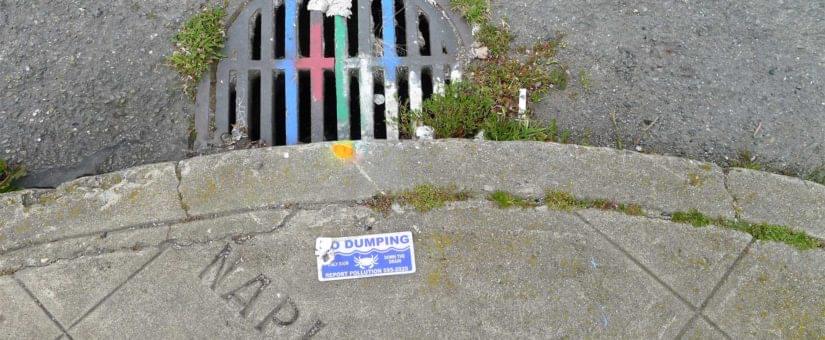
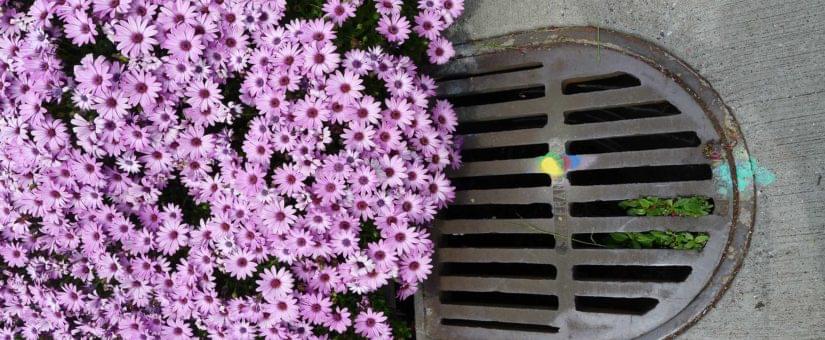
  • During the inspection of each catch basin a small color dot is marked near the basin indicating that it has been inspected. The color changes each round. (We will announce here each time a new round has begun, and which color should appear on the catch basins during that round). The round that began Thursday April 15th is using yellow paint.

The paint helps us to:

  • Clearly show the round’s progress
  • Identify missed basins
  • The public can alert us to missed basins and other mosquito activity by contacting us
  • During the 2009 season we had 11 complete rounds.
  • On average it took 15.5 days to complete a round
  • Each round we inspected approximately 22,495 basins
  • The team worked over 14,000 hours to inspect a total of 272,441 catch basins
  • We treated approximately 60% of the inspected basins with vectolex

Check a selection of the catch basins in San Francisco on our routes page.

Stay tuned to Mosquitosf.com for more information about the team throughout the season and throughout the year.
For more information on the Fight the Bite campaign in California, please visit the State of California West Nile resource site.

For information on the Fight the Bite campaign in San Francisco visit sfmosquito.org.

For more information about the San Francisco Department of the Environment visit their page on integrated pest management.

For more information about West Nile Virus and mosquito control check out the San Francisco Department of Health page on mosquitoesand the West Nile Virus

Go here for more information about Pestec’s municipal pest management services.